
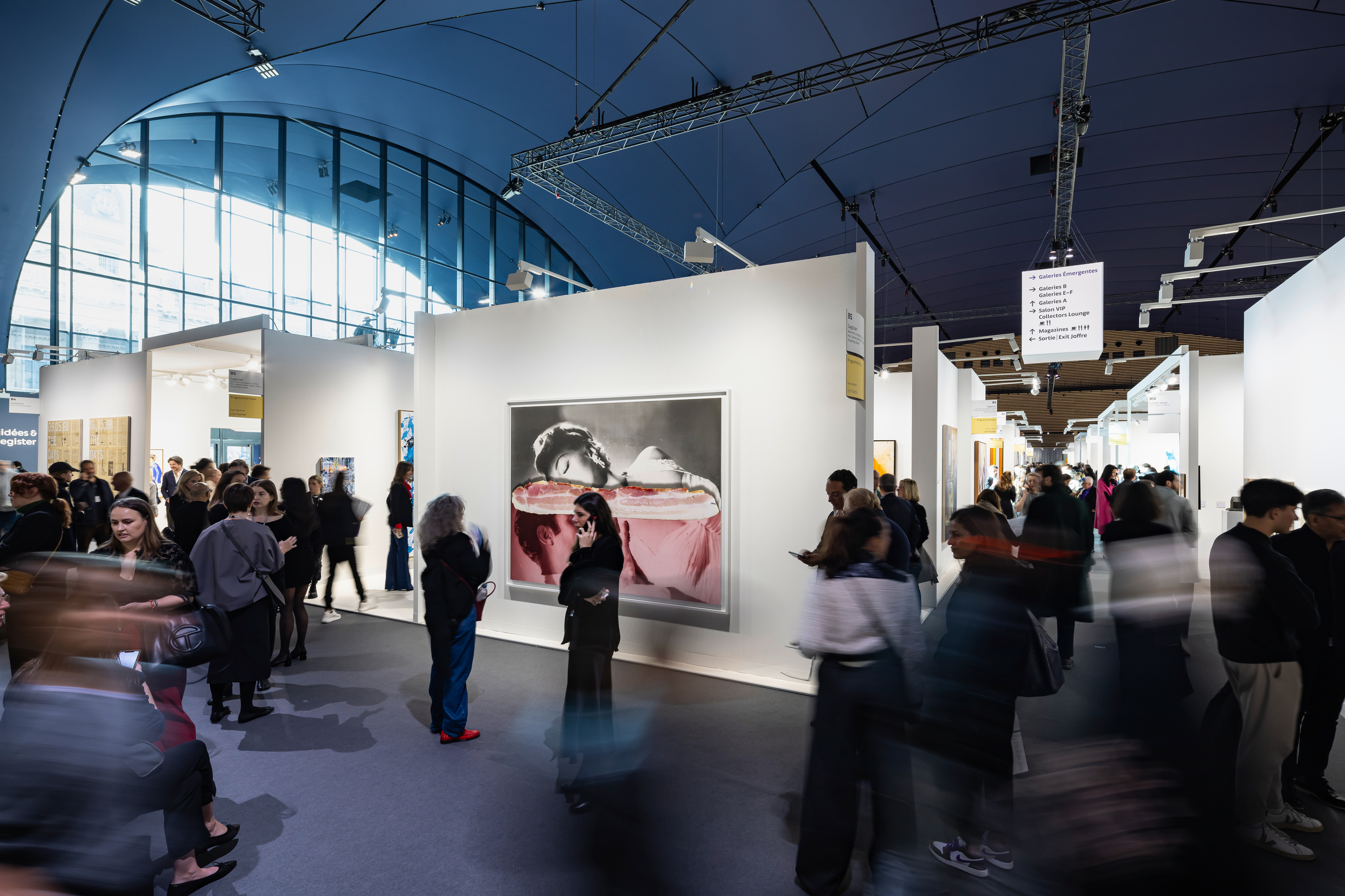
Grand Palais Éphémère, the very epicenter of Paris+ par Art Basel. Courtesy of Paris+ par Art Basel
A key pillar of consuming art is time. There is the notion of observing freely, to roam carelessly, which does not correspond with being on a time limit. The modern art consumer may struggle with this. While we are (mostly) still able to observe art on our own terms, we now live at an accelerated pace. A similar momentum will also find its way into our art spaces.
Maybe it already did. If you visited last year’s Paris+ par Art Basel, you might have left with an overwhelmed sensation. Not necessarily due to its grandiosity, it was notably smaller than other Art Basel’s across the globe, but because of the exhibited art/physical exhibition space-ratio. Add the substantial number of visitors and you would have been forced to rethink the harmonious side of art consumption.
This edition was the same. Unless you arrived with unlimited time on your hands, you had to condense in order to conceive. Distinguish and then carve that very perpetual pathway, both to better navigate among the installations and simply comprehend.
Maybe it already did. If you visited last year’s Paris+ par Art Basel, you might have left with an overwhelmed sensation. Not necessarily due to its grandiosity, it was notably smaller than other Art Basel’s across the globe, but because of the exhibited art/physical exhibition space-ratio. Add the substantial number of visitors and you would have been forced to rethink the harmonious side of art consumption.
This edition was the same. Unless you arrived with unlimited time on your hands, you had to condense in order to conceive. Distinguish and then carve that very perpetual pathway, both to better navigate among the installations and simply comprehend.
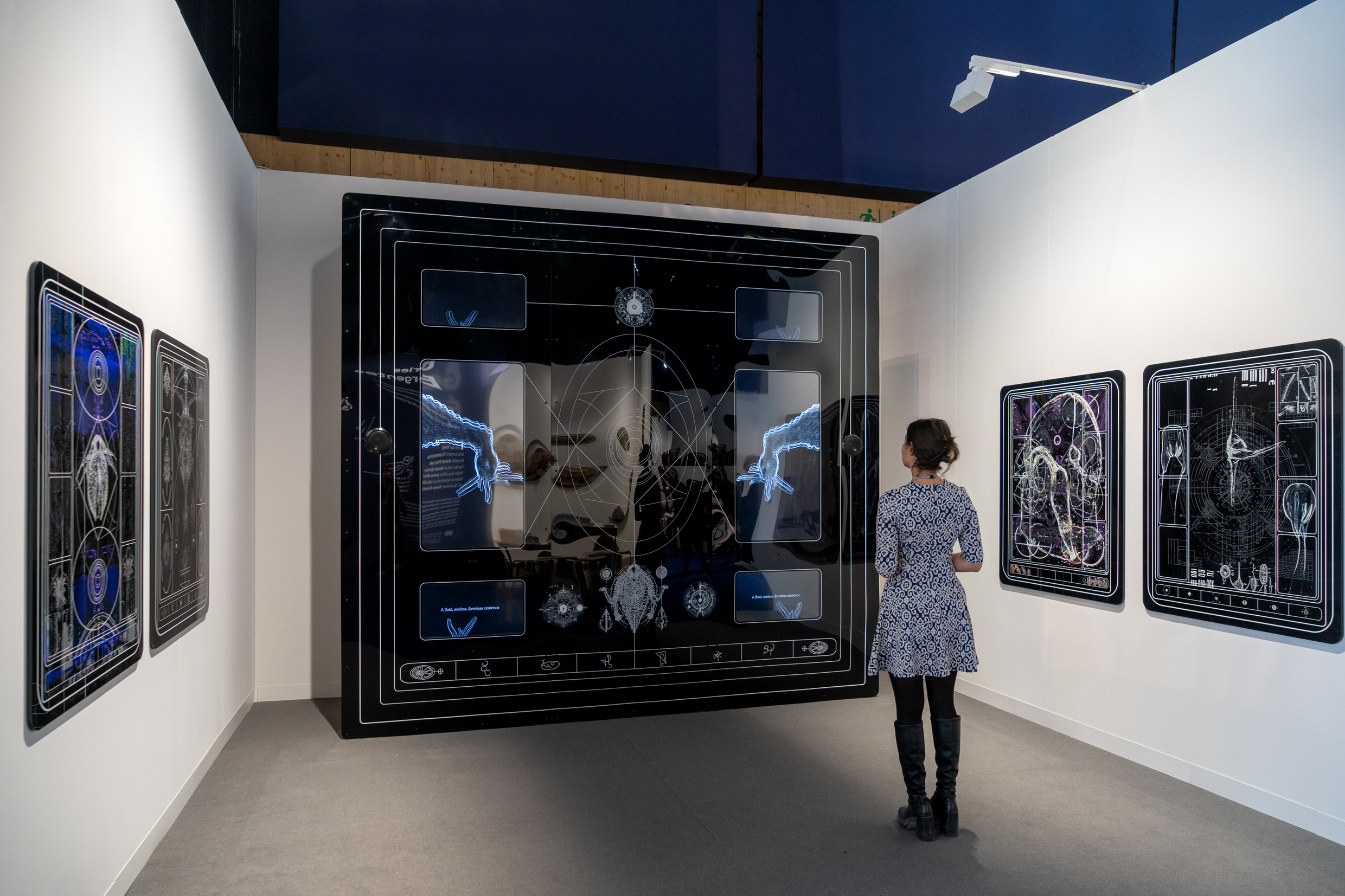
Joey Holder, Cryptid, 2023, installation view at Seventeen Gallery, Paris+ par Art Basel. Courtesy of Paris+ par Art Basel
In this sense, the liberated spirit of art still exists, as one would allow the brain to freely flicker in and out, between the visual components in front of you and the inner fragments of the self. But in another sense, we could subconsciously ruin the purpose of art as we put increased emphasis on our inner thought.
In 1966, Susan Sontag released Against Interpretation, a collection of essays dissecting multiple art forms while also covering the likes of Samuel Beckett and Frederich Nietszche. Here, the analysis is intricate, even on the tiniest of particles within contemporary art. In the essay On Style, originally published in 1965, Sontag questions the many approaches to art, particularly when conceived as “subject-matter” and how art becomes a victim of exhaustion. That, by instinct, one could make references between the artwork and the self for a stronger connection. But the artwork’s core purpose is never to serve as the foundation to one’s thought.
In 1966, Susan Sontag released Against Interpretation, a collection of essays dissecting multiple art forms while also covering the likes of Samuel Beckett and Frederich Nietszche. Here, the analysis is intricate, even on the tiniest of particles within contemporary art. In the essay On Style, originally published in 1965, Sontag questions the many approaches to art, particularly when conceived as “subject-matter” and how art becomes a victim of exhaustion. That, by instinct, one could make references between the artwork and the self for a stronger connection. But the artwork’s core purpose is never to serve as the foundation to one’s thought.
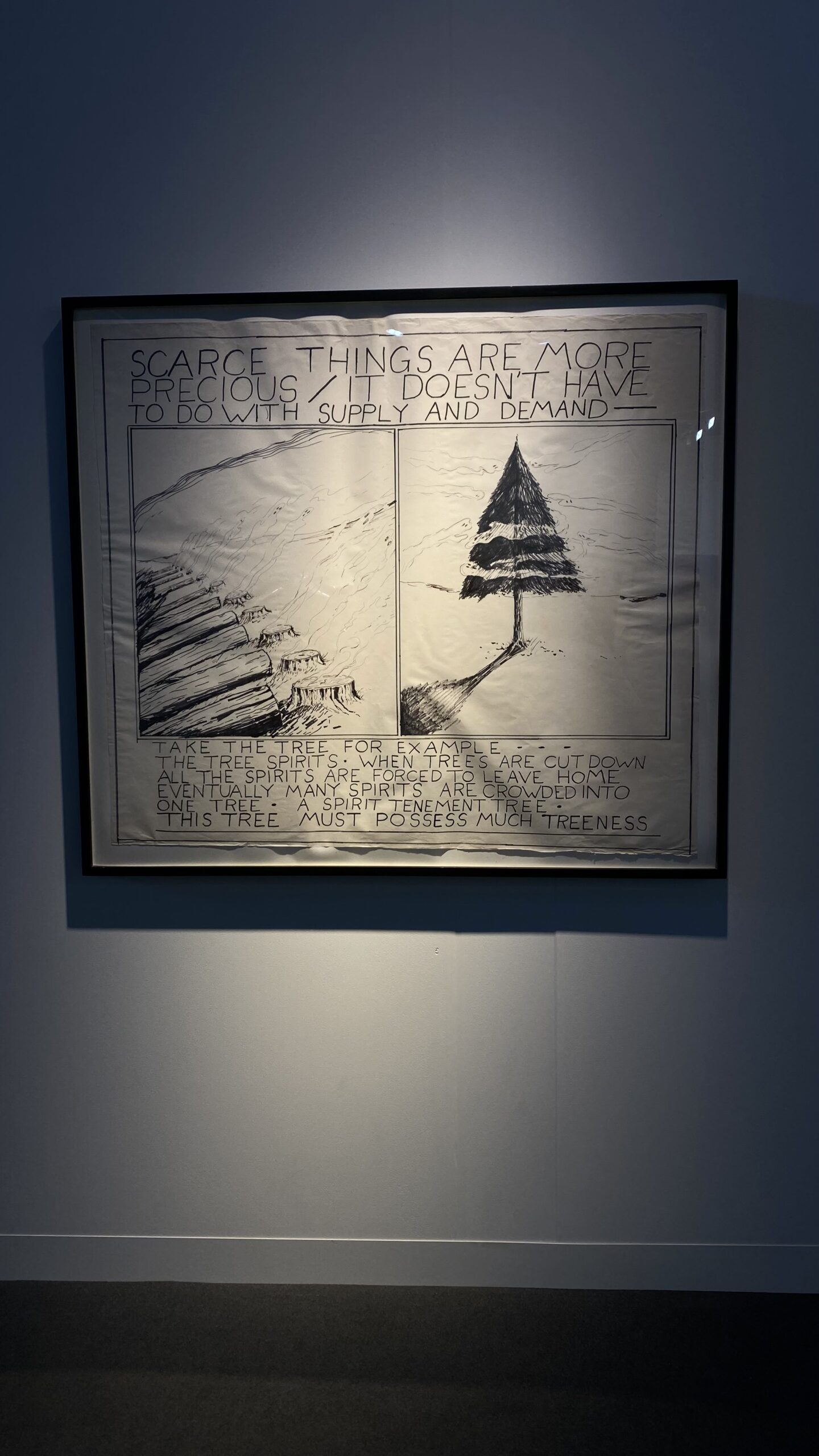
To the left: Mike Kelley, Three Spirits (from the Parasite Lily), 1979, installation view at Paris+ par Art Basel. To the right: Victor Burgin, VI, 1973, installation view at Paris+ par Art Basel. Photography by Linnéa Ruiz Mutikainen.
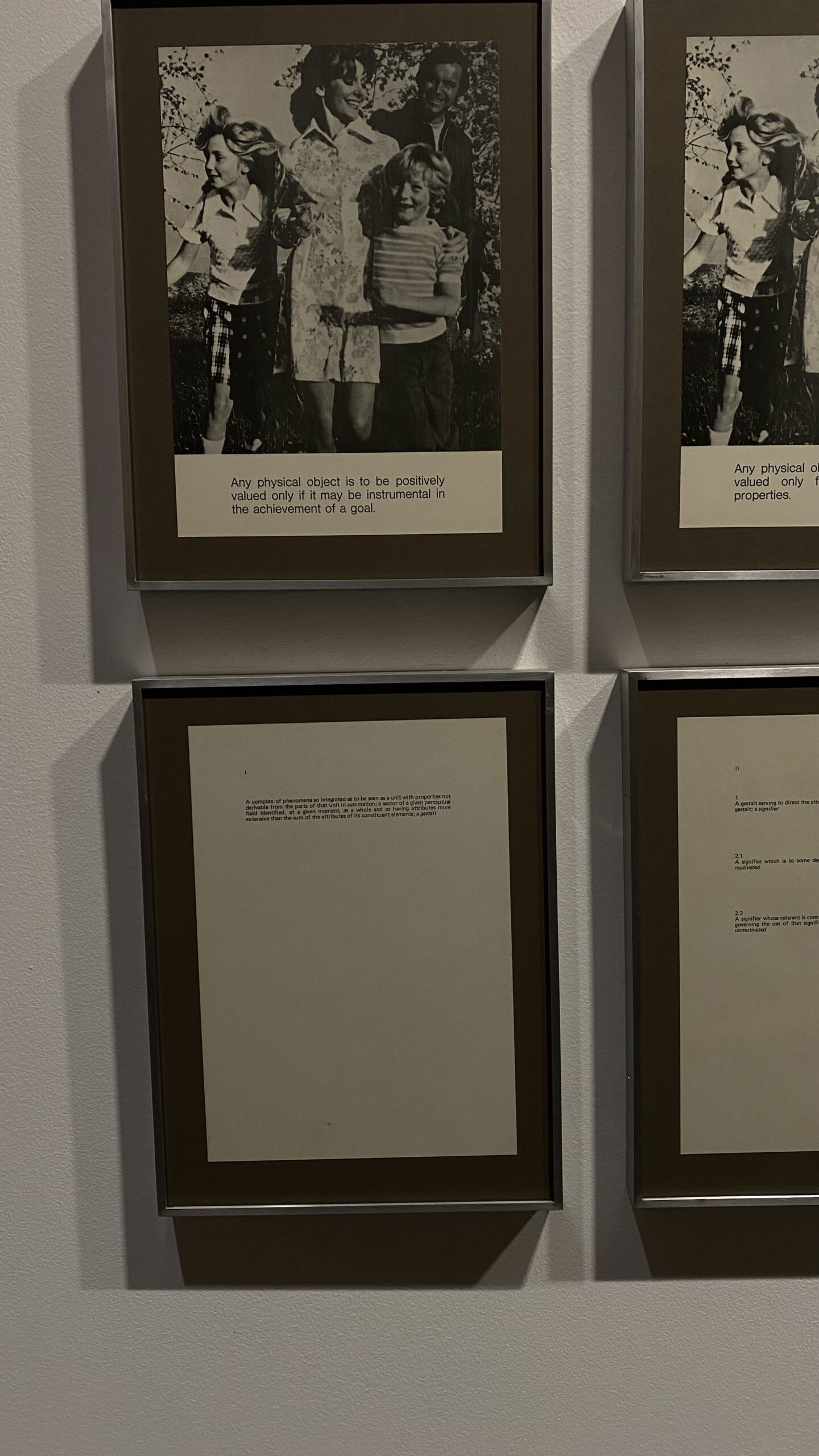
However, Sontag did admit how challenging it is to reflect upon art without simultaneously contemplating the self. That all great art induces contemplation, but at the same time, “all works of art are founded on a certain distance from the lived reality which is represented.” She then quotes Nietzsche’s The Birth of Tragedy from 1872: “Art is not an imitation of nature but its metaphysical supplement, raised up beside it in order to overcome it.” In this sense, we do have a habitual tendency to contemplate from within when approaching art, but need to remember the distinction between fiction and reality.
I must have exhausted plenty of the art on display at Paris+, as I continuously caught myself contemplating from within. I did approach certain artwork at a much quicker pace, maybe not because of the art itself, but because they aligned with these personal fragments. On a subconscious level, long before my conscious self even managed to connect the artwork with its corresponding thought, everything simply made sense. Previously unknown artwork managed to depict my actions, perhaps much better than I ever could myself. Or at least, that is what my subconscious told my conscious, as I approached each one of these.
I must have exhausted plenty of the art on display at Paris+, as I continuously caught myself contemplating from within. I did approach certain artwork at a much quicker pace, maybe not because of the art itself, but because they aligned with these personal fragments. On a subconscious level, long before my conscious self even managed to connect the artwork with its corresponding thought, everything simply made sense. Previously unknown artwork managed to depict my actions, perhaps much better than I ever could myself. Or at least, that is what my subconscious told my conscious, as I approached each one of these.
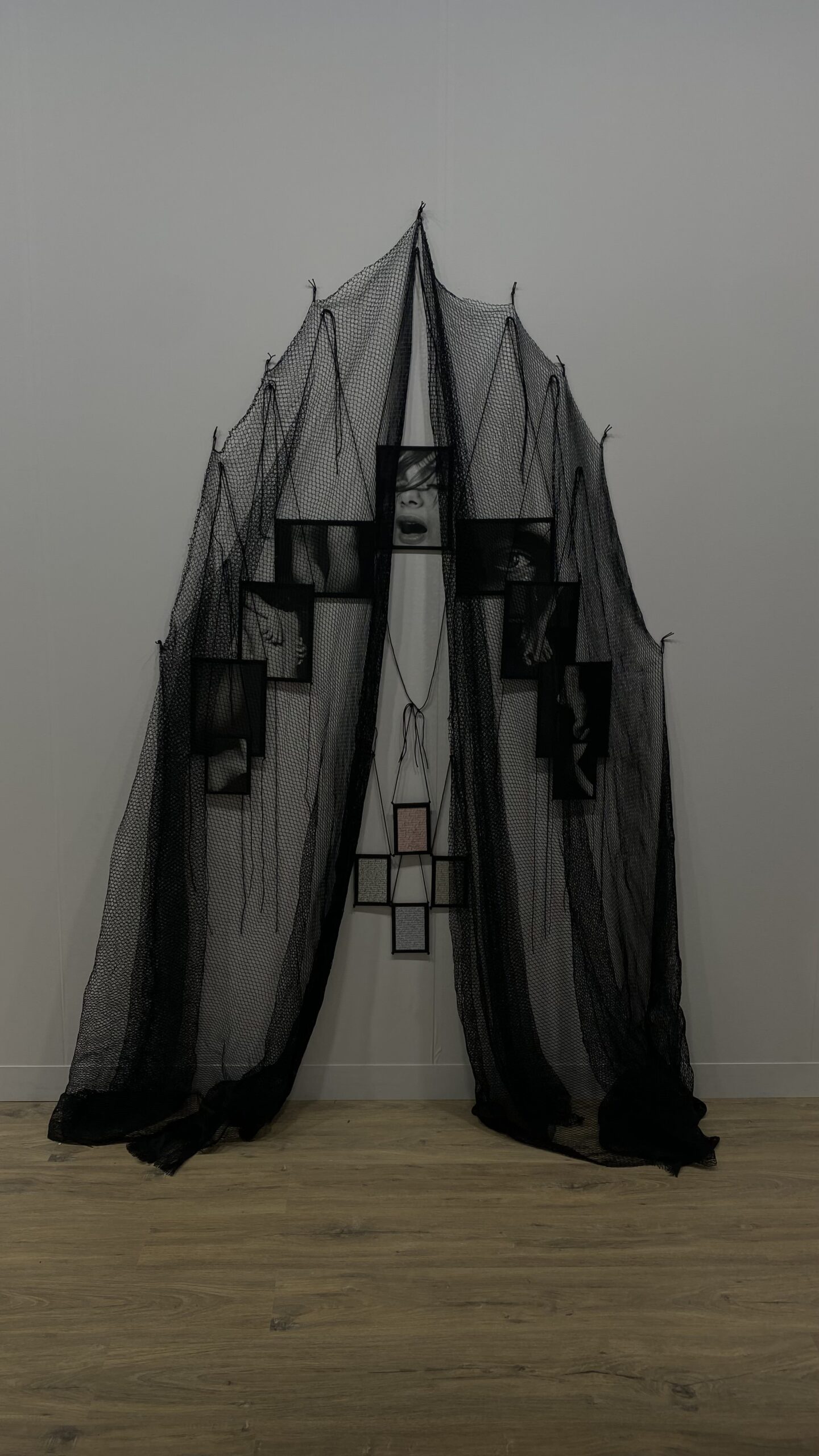
Annette Messager, Mes Voeux sous filets, 1998, installation view at Marian Goodman Gallery at Paris+ par Art Basel. Photography by Linnéa Ruiz Mutikainen
Pieces on dystopia and hypermodernism wonderfully supported this inner narrative. Annette Messager’s Mes Voeux sous filets (1998) in particular, displayed at Marian Goodman’s booth. Messager has long been concerned with substantial wall pieces, this one consisted of nine black and white gelatin silver prints and four framed writings, with glass, strings, and nets featured. She frequently visits female perception through her work, which was also seen in this jarring, raw, and shrine-like creation. Document Space hosted Tromarama and Deep Pressure (2023), portraying the current clash between work and leisure, private and public through monitors and computer-generation.
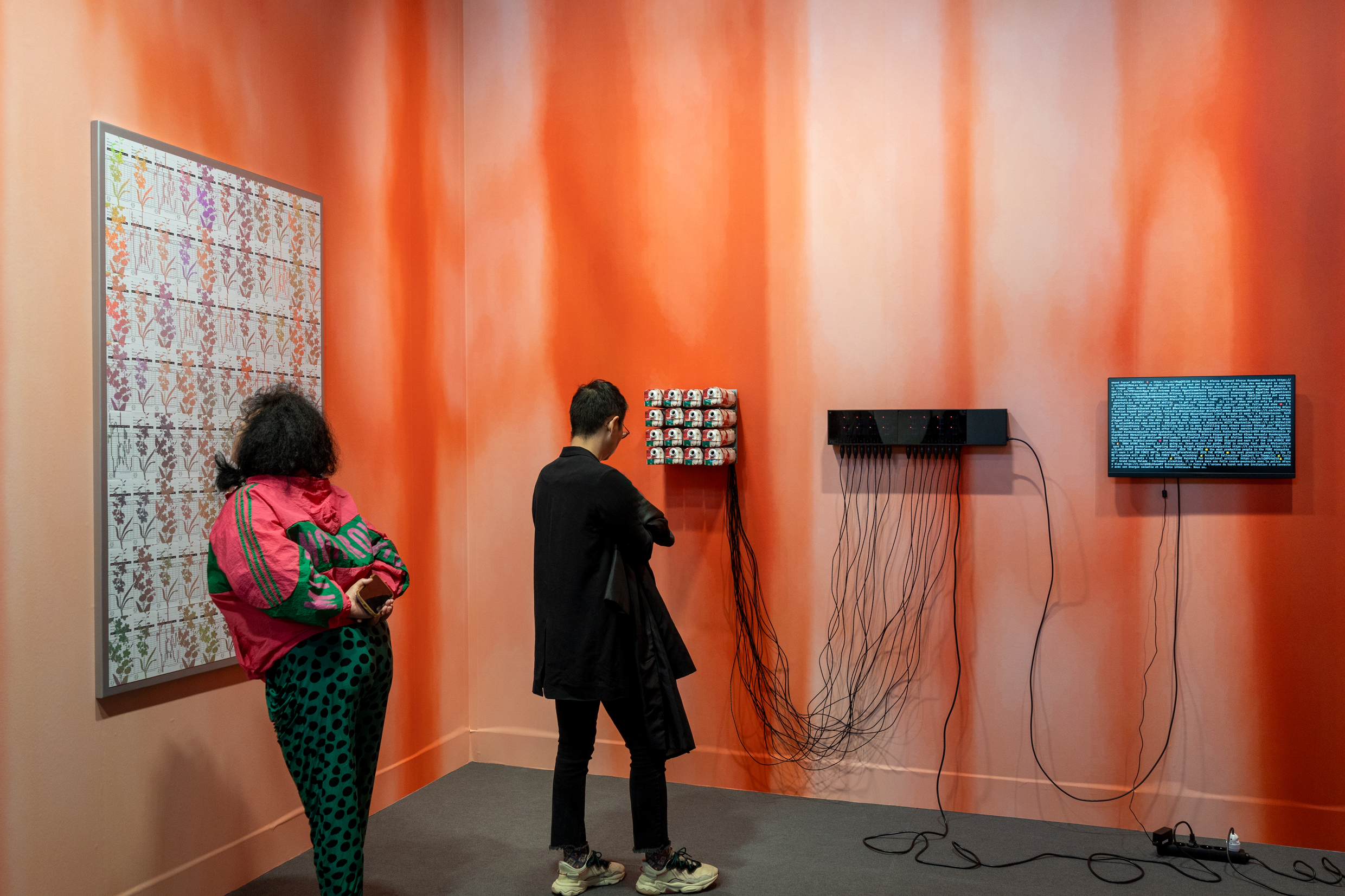
Tromarama, Deep Pressure, 2023, installation view at Document Space, Paris+ par Art Basel. Courtesy of Paris+ par Art Basel.
I don’t think I could ever tell you why these particular pieces stood out in the first place. Probably because I will never know this myself. That strong sentiment was all generated by my subconscious self, triggered by the artwork. Yes, maybe the etherealized art consumption was indeed limited at Paris+. Yes, maybe I also embraced the concept of speedrunning as I accelerated between one art piece and the other, intuition being my only navigator. But it surprisingly allowed me to reunite with the past, and revisit a headspace I did not mind revisiting.


