
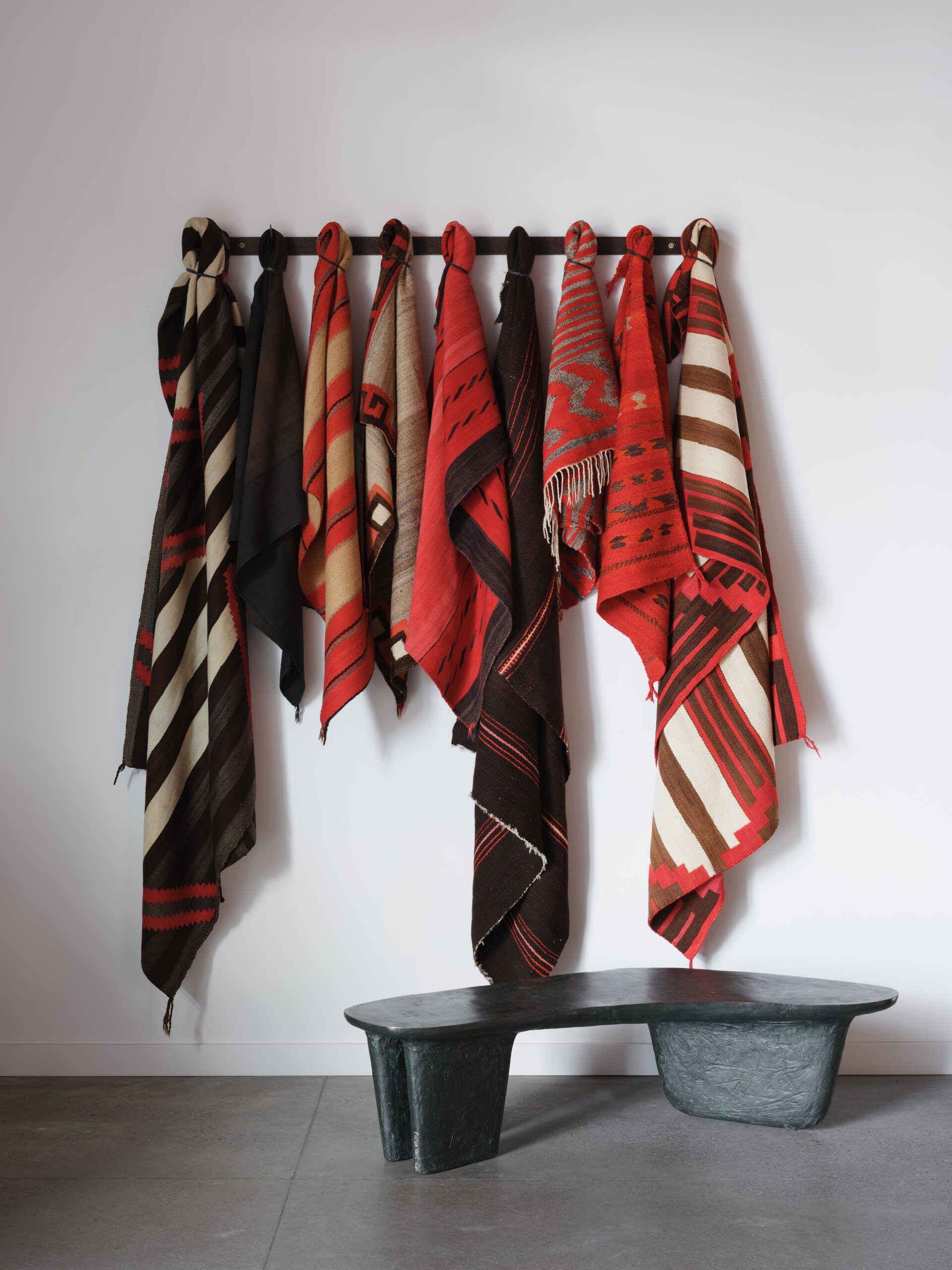
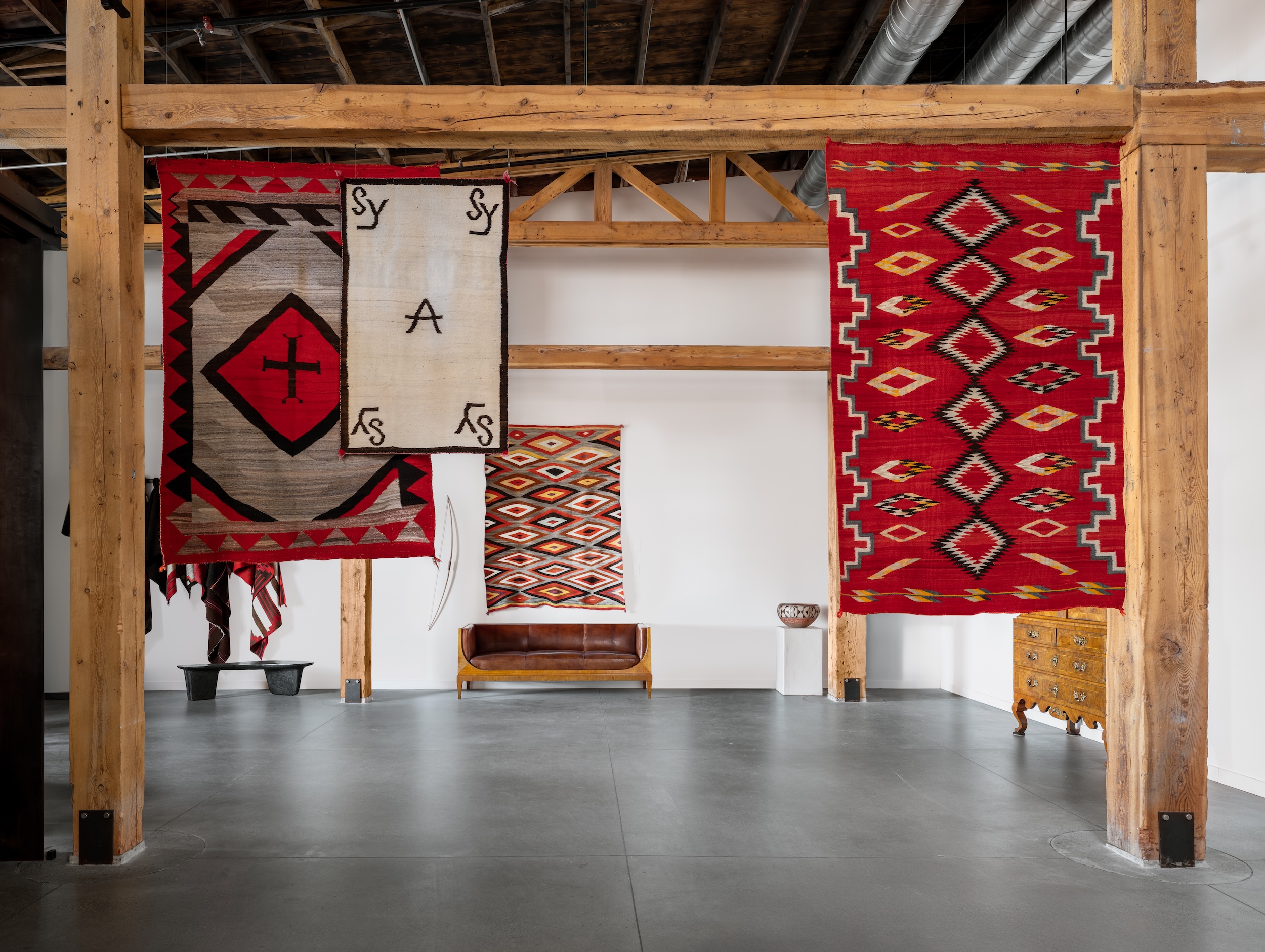
Emerson Bailey’s latest exhibition, Shared Ground, brings together 19th-century European furniture and Indigenous works from the American Southwest in a direct, object-to-object dialogue. The show is a collaboration with Shiprock Santa Fe, the respected gallery founded by Jed Foutz, known for its scholarship in Native American art.
With Shared Ground, she extends that perspective into a more specific inquiry: what happens when these objects are treated not as aesthetic counterpoints, but as contemporaries shaped by trade, labor, and 19th-century economies?
With Shared Ground, she extends that perspective into a more specific inquiry: what happens when these objects are treated not as aesthetic counterpoints, but as contemporaries shaped by trade, labor, and 19th-century economies?

The Design Release: When people talk about Western interiors today, what do you think they’re actually referencing, and what do you think gets left out of that conversation?
Emerson Bailey: When people talk about Western interiors today, I feel they are often referencing an atmosphere more than a strict definition. They mean warmth, patina, and honest materials. They are drawn to the romance of open landscapes and a lived-in authenticity, and they translate that into interiors through leather, handwoven textiles, simple forms, and pieces that feel collected rather than newly made.
In my view, what can get missed is how specific and layered the West really is. It is not one look or one story. There are many regions, many histories, and many craft traditions that overlap and influence one another. I also think there is an opportunity to discuss provenance and authorship because those details deepen the meaning of a space. When you know where an object comes from, how it was made, and why it mattered in its original context, it carries a different kind of presence.
For me, the most successful Western interiors are the ones that move beyond the expected cues and feel rooted in real objects and real material intelligence. They are built slowly, with restraint, and with pieces that have earned their place through quality, age, and story.
In my view, what can get missed is how specific and layered the West really is. It is not one look or one story. There are many regions, many histories, and many craft traditions that overlap and influence one another. I also think there is an opportunity to discuss provenance and authorship because those details deepen the meaning of a space. When you know where an object comes from, how it was made, and why it mattered in its original context, it carries a different kind of presence.
For me, the most successful Western interiors are the ones that move beyond the expected cues and feel rooted in real objects and real material intelligence. They are built slowly, with restraint, and with pieces that have earned their place through quality, age, and story.
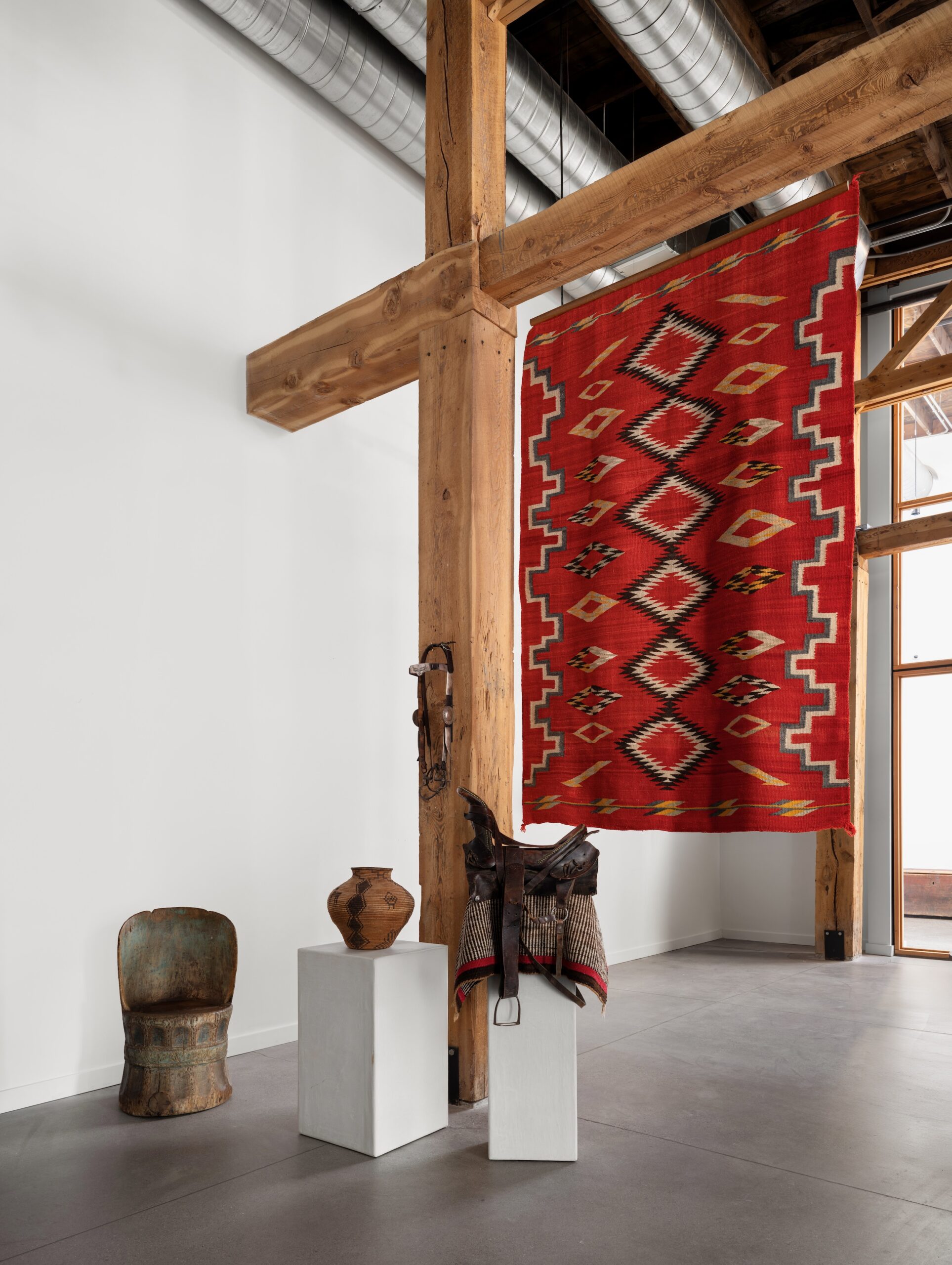
TDR: What happens when you place 19th-century European furniture and 19th-century Indigenous objects in conversation as contemporaries, rather than as aesthetic contrasts?
EB: When you place 19th century European furniture and 19th century Indigenous objects in conversation as contemporaries, the room changes. It stops being about contrast and starts being about shared values. You begin to see that both were made with deep material knowledge, strong standards of craft, and an understanding of daily life, use, and longevity.
It also creates a more honest sense of time. Rather than treating European pieces as history and Indigenous works as atmosphere, you recognize that these objects were made in the same century, shaped by their own regions, resources, and economies, and carried forward because they were worth keeping. That shift invites more respect, more curiosity, and better questions.
For me, it becomes less about creating a look and more about building a narrative. The conversation reveals proportion, texture, and intention. It highlights the intelligence of handmade objects, and it reminds us that great design is not tied to one geography. It is tied to integrity, utility, and beauty.
It also creates a more honest sense of time. Rather than treating European pieces as history and Indigenous works as atmosphere, you recognize that these objects were made in the same century, shaped by their own regions, resources, and economies, and carried forward because they were worth keeping. That shift invites more respect, more curiosity, and better questions.
For me, it becomes less about creating a look and more about building a narrative. The conversation reveals proportion, texture, and intention. It highlights the intelligence of handmade objects, and it reminds us that great design is not tied to one geography. It is tied to integrity, utility, and beauty.
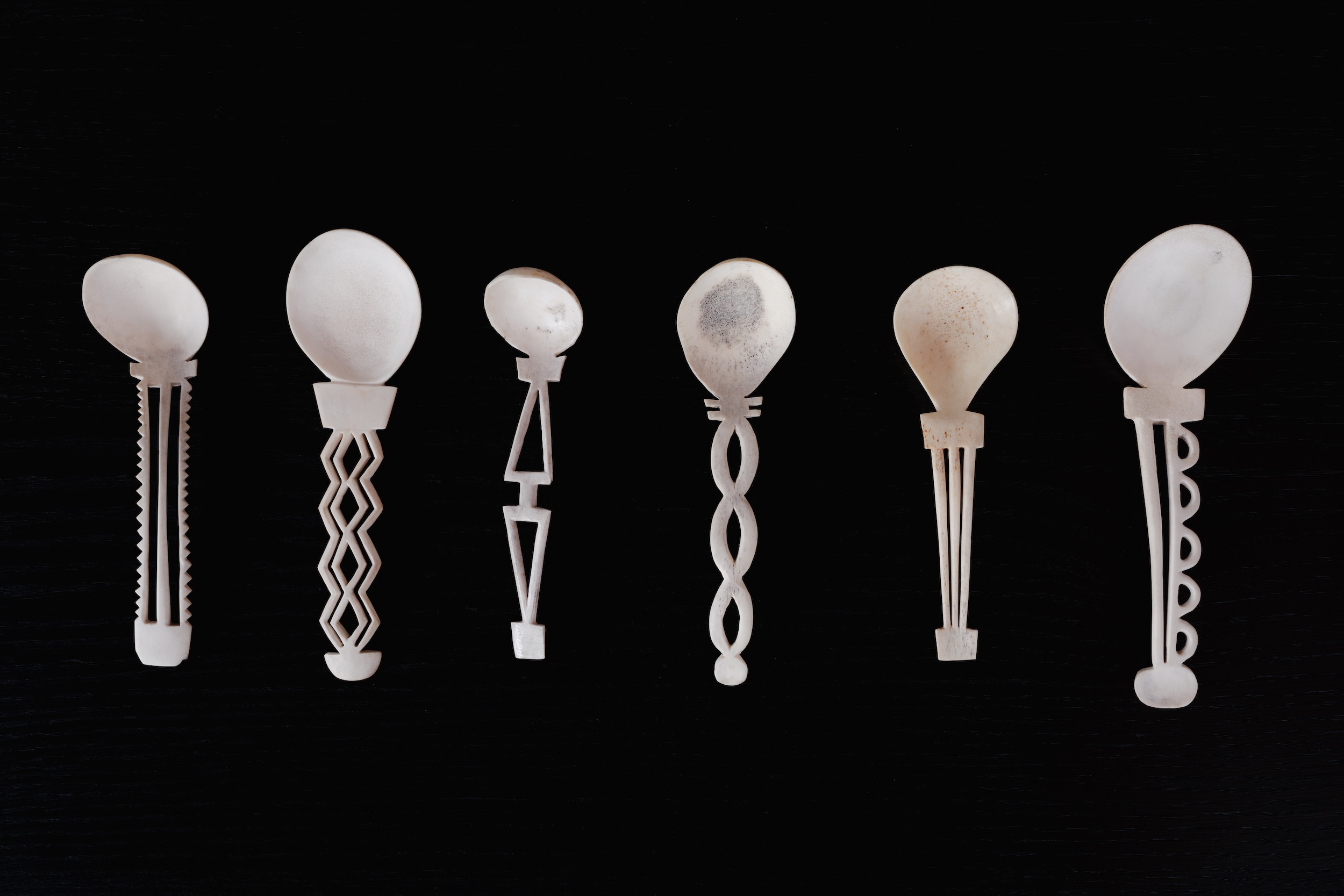
TDR: The horse is a powerful connective symbol in the exhibition. Why was that an important narrative thread for you?
EB: The horse was an important narrative thread for me because it is personal. Horses have been part of my life for as long as I can remember, and they have shaped how I see beauty, discipline, and partnership. That relationship is built on trust and sensitivity as much as strength, and I wanted the exhibition to carry that same balance.
In the 19th century, the horse was also a true connective force across cultures. It was central to work, movement, protection, and status, and it shaped daily life in ways we can still feel today. When you follow the horse through objects, you begin to see how craft and function meet, how materials were chosen, and how meaning was carried through use.
For me, the horse creates cohesion without turning the exhibition into a single story. It gives viewers an immediate point of recognition, then invites them to look closer and understand each piece on its own terms. It is a symbol, but it is also a lived reality, and that is exactly why it felt essential.
In the 19th century, the horse was also a true connective force across cultures. It was central to work, movement, protection, and status, and it shaped daily life in ways we can still feel today. When you follow the horse through objects, you begin to see how craft and function meet, how materials were chosen, and how meaning was carried through use.
For me, the horse creates cohesion without turning the exhibition into a single story. It gives viewers an immediate point of recognition, then invites them to look closer and understand each piece on its own terms. It is a symbol, but it is also a lived reality, and that is exactly why it felt essential.
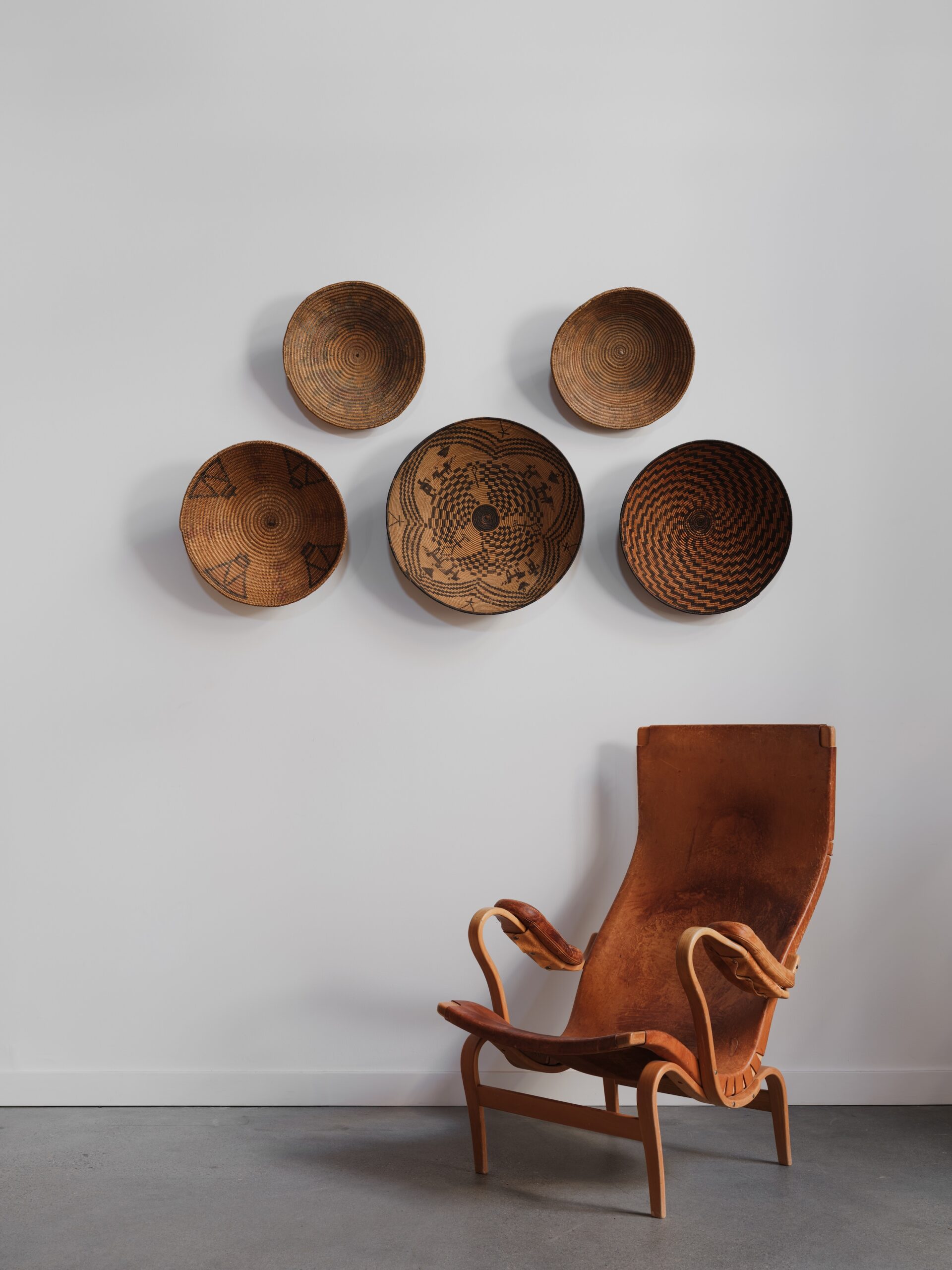
TDR: Many of the works in the show dismiss the distinction between luxury and utility, such as the saddle blankets, headstalls, and folk armchairs. Why was that tension important to explore?
EB: That tension was important because it gets to the heart of what I find most compelling about objects. In many traditions, especially in the 19th century, the most beautiful things were also the most used. They were made to work hard, to last, and to travel through real life, and the refinement comes from mastery of material and craft, not from fragility or excess.
Pieces like saddle blankets and headstalls carry that idea perfectly. They were essential tools, but they were also expressions of identity, pride, and visual language. The same is true of folk armchairs. They were built for comfort and daily use, yet they often show extraordinary proportion, handwork, and ingenuity. When you look closely, utility is not the opposite of luxury. It is often the source of it.
Exploring that overlap also felt relevant to how we live now. The exhibition invites a different definition of luxury, one rooted in purpose, provenance, and the confidence of things made well. Objects that have earned their patina and presence through use tend to hold a deeper kind of value, and I wanted the show to reflect that.
Pieces like saddle blankets and headstalls carry that idea perfectly. They were essential tools, but they were also expressions of identity, pride, and visual language. The same is true of folk armchairs. They were built for comfort and daily use, yet they often show extraordinary proportion, handwork, and ingenuity. When you look closely, utility is not the opposite of luxury. It is often the source of it.
Exploring that overlap also felt relevant to how we live now. The exhibition invites a different definition of luxury, one rooted in purpose, provenance, and the confidence of things made well. Objects that have earned their patina and presence through use tend to hold a deeper kind of value, and I wanted the show to reflect that.
TDR: There’s a fine line between juxtaposition and aestheticization when working across cultures. How did you approach curation to ensure context and authorship remained intact?
EB: I was very intentional about making sure the exhibition stayed grounded in context and authorship. For me, that starts with research and specificity. I want each object to be understood as something made by real hands, from a particular place, for a particular purpose, within a distinct cultural tradition. The visual impact matters, but it cannot be the whole story.
In practical terms, that meant leading with provenance and clear identification wherever possible, and being transparent when details were unknown. It also meant resisting easy categories and overly broad language. I wanted viewers to feel the individuality of each piece before it entered a dialogue with another.
From there, the pairings were built through shared principles rather than surface similarity. Craft, materials, use, and the passage of time became the connective tissue. When the conversation is rooted in those fundamentals, the exhibition can feel cohesive without flattening differences. It becomes less about styling and more about creating a respectful framework where each work keeps its integrity.
In practical terms, that meant leading with provenance and clear identification wherever possible, and being transparent when details were unknown. It also meant resisting easy categories and overly broad language. I wanted viewers to feel the individuality of each piece before it entered a dialogue with another.
From there, the pairings were built through shared principles rather than surface similarity. Craft, materials, use, and the passage of time became the connective tissue. When the conversation is rooted in those fundamentals, the exhibition can feel cohesive without flattening differences. It becomes less about styling and more about creating a respectful framework where each work keeps its integrity.
TDR: From your perspective, what defines the interior design culture in Bozeman today? What makes it distinct from other markets?
EB: In Bozeman today, the design culture is defined by a rare combination of sophistication and practicality. People live very close to the landscape, and that shapes what they value. Interiors need to be beautiful, but they also need to work. Materials matter. Craft matters. Comfort matters. There is a strong preference for spaces that feel grounded, calm, and lived in rather than overly polished, and there is a real appreciation for pieces with age, provenance, and meaning.
What makes Bozeman distinct is that it is both deeply local and surprisingly international in its point of view. You have a strong community of makers, builders, and artisans, alongside homeowners who travel, collect, and care about the story behind what they bring into their spaces. The market rewards restraint and authenticity, and the most successful projects tend to feel confident, layered over time, and rooted in natural materials and thoughtful details rather than trends.
We work as an interior design studio throughout the Rocky Mountains and beyond, and we also operate as a gallery with an active online platform that allows us to source and place pieces far outside Montana. Our focus has always been global in terms of where we collect and who we collaborate with, and Bozeman is an ideal home base for that. It is a place where people understand the value of objects made with integrity, and where a collected, timeless approach to interiors feels natural.
What makes Bozeman distinct is that it is both deeply local and surprisingly international in its point of view. You have a strong community of makers, builders, and artisans, alongside homeowners who travel, collect, and care about the story behind what they bring into their spaces. The market rewards restraint and authenticity, and the most successful projects tend to feel confident, layered over time, and rooted in natural materials and thoughtful details rather than trends.
We work as an interior design studio throughout the Rocky Mountains and beyond, and we also operate as a gallery with an active online platform that allows us to source and place pieces far outside Montana. Our focus has always been global in terms of where we collect and who we collaborate with, and Bozeman is an ideal home base for that. It is a place where people understand the value of objects made with integrity, and where a collected, timeless approach to interiors feels natural.
TDR: How would you describe the collector community in Bozeman? Who is buying, and what kinds of objects are resonating?
EB: In Bozeman, the collector community is thoughtful and increasingly sophisticated, but it stays grounded. Many buyers are living with their pieces day to day, not just acquiring them for display, so there is a strong preference for objects that can hold up to real life and still feel special. I also see a real curiosity here. People want to understand what something is, where it came from, how it was made, and why it matters.
Who is buying is a mix. There are long time Montana families who have always valued craftsmanship and heritage, and there is also a newer group of homeowners who have come to Bozeman for the lifestyle and are building homes with real intention. Many have collected elsewhere or have international exposure, so they respond quickly to quality, proportion, and authenticity. They are not looking for trendy replicas. They want the real thing, and they want it to feel personal.
What is resonating most are pieces with integrity and presence. Swedish and broader European antiques do very well here, especially furniture with clean lines, beautiful patina, and a sense of restraint. We also see strong interest in purpose-built pieces that read as sculptural, benches, stools, trestle tables, and work tables, along with objects tied to the horse and the broader ranch tradition. Textiles and handmade elements resonate when they have clear provenance and a strong material story.
In other markets we serve, including the broader Rocky Mountain region and clients farther afield through our gallery and online platform, the same fundamentals hold true. The strongest demand is for timeless objects that elevate a space, carry history without feeling precious, and are chosen for quality rather than for a look.
Who is buying is a mix. There are long time Montana families who have always valued craftsmanship and heritage, and there is also a newer group of homeowners who have come to Bozeman for the lifestyle and are building homes with real intention. Many have collected elsewhere or have international exposure, so they respond quickly to quality, proportion, and authenticity. They are not looking for trendy replicas. They want the real thing, and they want it to feel personal.
What is resonating most are pieces with integrity and presence. Swedish and broader European antiques do very well here, especially furniture with clean lines, beautiful patina, and a sense of restraint. We also see strong interest in purpose-built pieces that read as sculptural, benches, stools, trestle tables, and work tables, along with objects tied to the horse and the broader ranch tradition. Textiles and handmade elements resonate when they have clear provenance and a strong material story.
In other markets we serve, including the broader Rocky Mountain region and clients farther afield through our gallery and online platform, the same fundamentals hold true. The strongest demand is for timeless objects that elevate a space, carry history without feeling precious, and are chosen for quality rather than for a look.
TDR: You founded Emerson Bailey in 2016. How has the design and collector landscape in Bozeman evolved since then?
EB: Since founding Emerson Bailey in 2016, I have watched the Rocky Mountain design landscape evolve in a clear way, and in the last three years living in the Bozeman area I have felt that shift very directly. I have worked in this region for more than three decades, and what is happening in Bozeman now feels like part of a larger maturation of the market.
For a long time, the dominant expectation was a rustic, mountain themed look. Then there was a strong move into what many people call mountain modern, cleaner lines, larger scale, and a more contemporary architectural envelope. What feels exciting now is a renewed interest in spaces that are more timeless and more collected. There is a growing appetite for restraint, for natural materials, for patina and provenance, and for interiors that feel grounded rather than themed.
Collecting has become more intentional as well. People are less interested in buying a look and more interested in building a home with permanence, mixing honest pieces, antiques, and handmade elements that carry real story. At the same time, the creative community has expanded. There is more dialogue between architects, builders, artisans, and makers, and a stronger culture of collaboration. For me, that is what makes this moment in Bozeman distinct. It is a place with real momentum, and a market that is increasingly ready for design that is thoughtful, layered, and built to last.
For a long time, the dominant expectation was a rustic, mountain themed look. Then there was a strong move into what many people call mountain modern, cleaner lines, larger scale, and a more contemporary architectural envelope. What feels exciting now is a renewed interest in spaces that are more timeless and more collected. There is a growing appetite for restraint, for natural materials, for patina and provenance, and for interiors that feel grounded rather than themed.
Collecting has become more intentional as well. People are less interested in buying a look and more interested in building a home with permanence, mixing honest pieces, antiques, and handmade elements that carry real story. At the same time, the creative community has expanded. There is more dialogue between architects, builders, artisans, and makers, and a stronger culture of collaboration. For me, that is what makes this moment in Bozeman distinct. It is a place with real momentum, and a market that is increasingly ready for design that is thoughtful, layered, and built to last.
Shared Ground
by Emerson Bailey Gallery
is on view now until May 20, 2026
by Emerson Bailey Gallery
is on view now until May 20, 2026


