
Photography by © O.Tkachuk for August
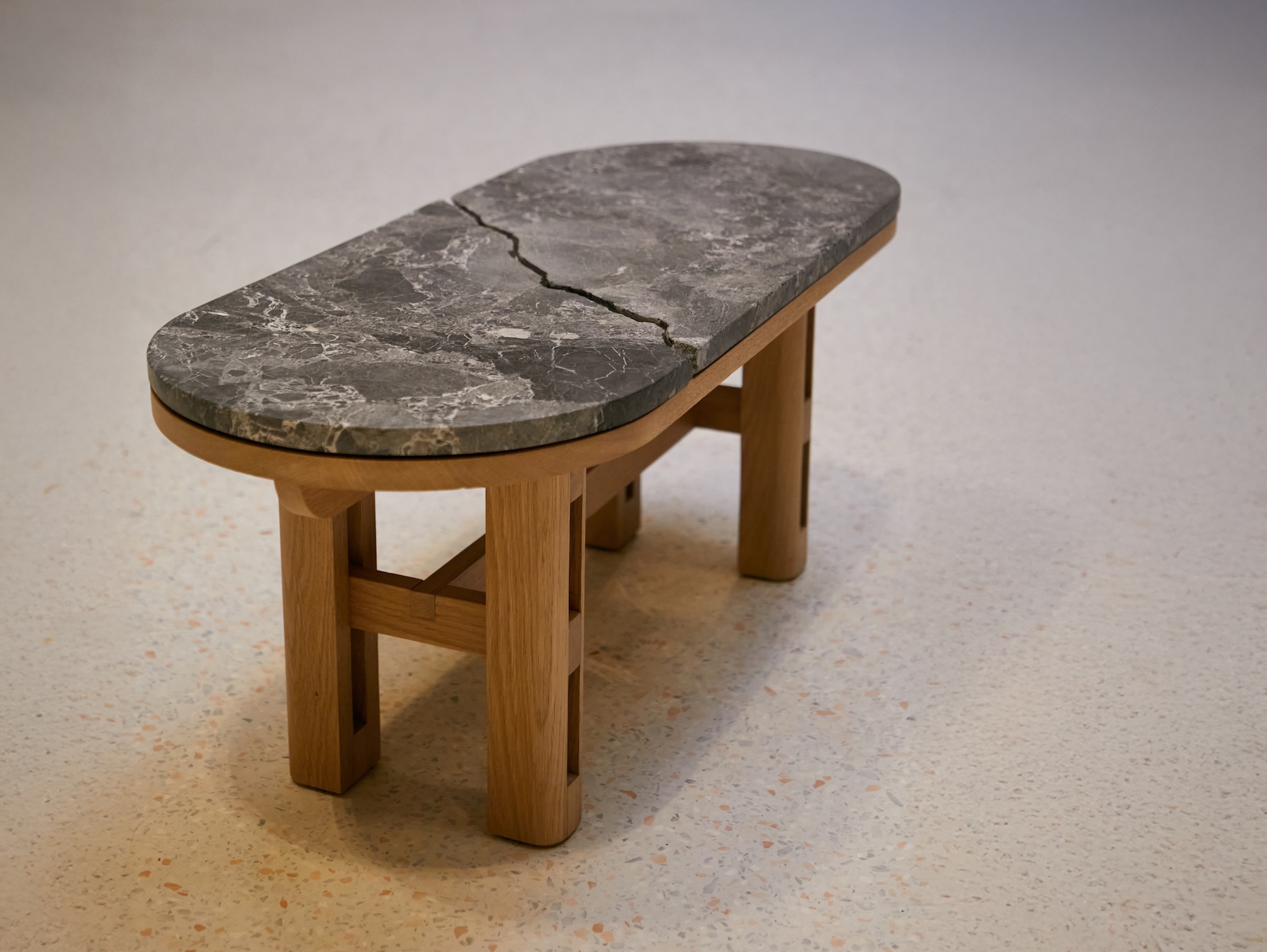
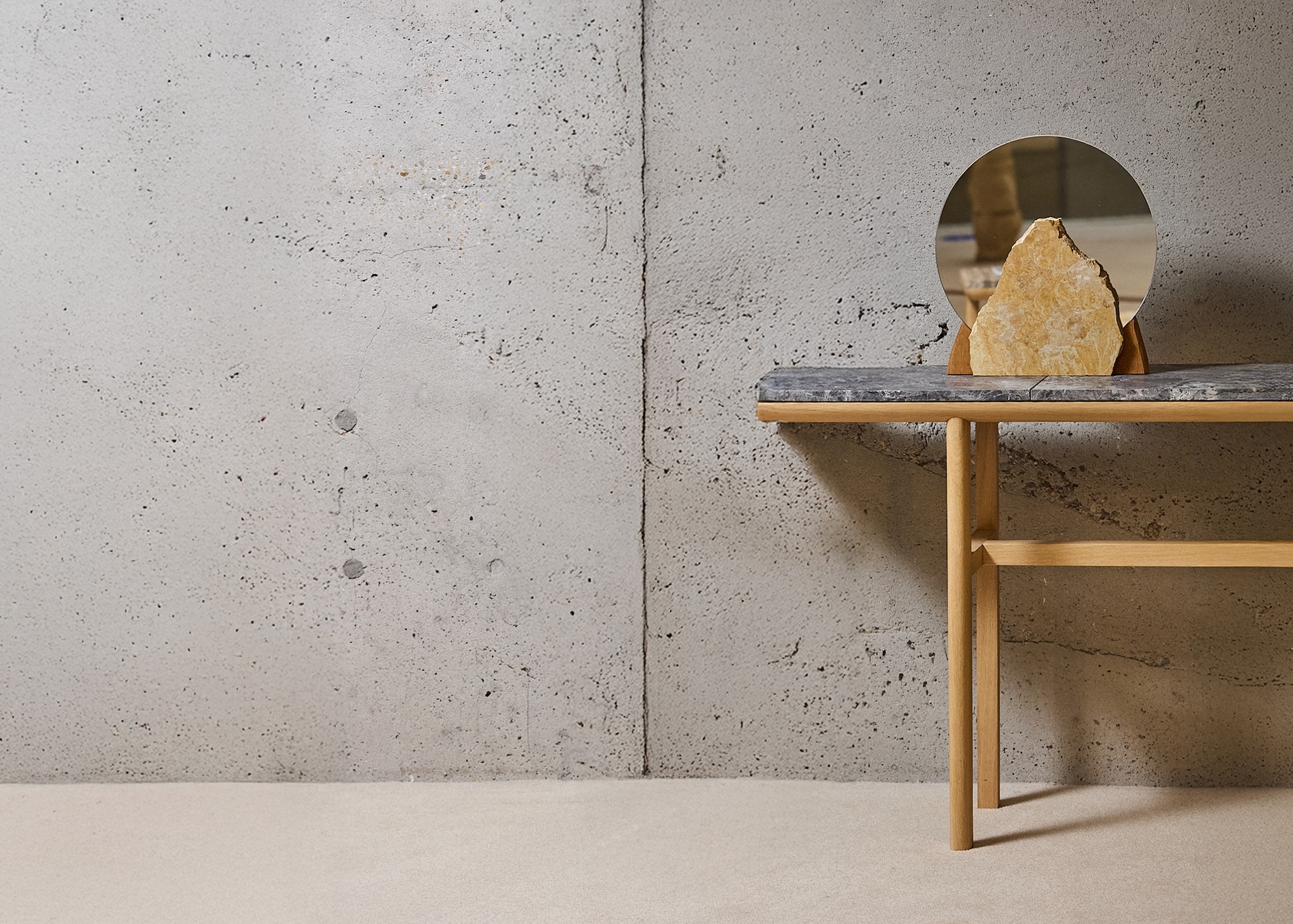
Reclaimed materials were present from the beginning, though not as a formalized strategy. Leather scraps from an internship became the base material for a series of brass objects. Stone offcuts were used for small side tables. Packaging was also treated as part of the design process, with attention paid to reuse and recyclability rather than convenience.
The question of sustainability became more urgent after she relocated to Brussels in 2018. The move marked a reset of her practice and clarified several priorities. She wanted a more direct relationship with fabrication and to spend more time in the workshop. She also no longer wanted to contribute to what she describes as the excessive consumption of raw materials. At the same time, working on interior architecture projects exposed her to the scale of material waste generated on construction sites.
The question of sustainability became more urgent after she relocated to Brussels in 2018. The move marked a reset of her practice and clarified several priorities. She wanted a more direct relationship with fabrication and to spend more time in the workshop. She also no longer wanted to contribute to what she describes as the excessive consumption of raw materials. At the same time, working on interior architecture projects exposed her to the scale of material waste generated on construction sites.
What one person discarded as scrap, I saw as potential design elements.
- Ariane van Dievoet
That realization pushed her toward self-prototyping and experimentation with reclaimed materials. She joined a shared workshop in Brussels and began working primarily with materials sourced from construction sites or production waste. Local, ethically sourced wood became part of her material palette as well, allowing her to produce larger furniture pieces when needed. The process was slower and less predictable, but it aligned with how she wanted to work.
Before founding Augusta Gallery, visibility was a persistent challenge. Like many designers running independent studios, Ariane relied heavily on fairs, group exhibitions, and markets to be seen. The system emphasized novelty and frequent new releases. Promoting long-lasting designs while being expected to produce new collections each season felt contradictory.
That question eventually led to the creation of Augusta [link: https://www.instagram.com/augustagallery], a gallery she co-founded with her sister. Rather than focusing exclusively on her own work, Ariane wanted to create a collective exhibition space that could present a range of approaches to high-end sustainable design. Representing multiple designers felt like a way to increase both visibility and impact.
Before founding Augusta Gallery, visibility was a persistent challenge. Like many designers running independent studios, Ariane relied heavily on fairs, group exhibitions, and markets to be seen. The system emphasized novelty and frequent new releases. Promoting long-lasting designs while being expected to produce new collections each season felt contradictory.
That question eventually led to the creation of Augusta [link: https://www.instagram.com/augustagallery], a gallery she co-founded with her sister. Rather than focusing exclusively on her own work, Ariane wanted to create a collective exhibition space that could present a range of approaches to high-end sustainable design. Representing multiple designers felt like a way to increase both visibility and impact.
Photography by © Stan Huaux
Research was another motivation. The gallery allowed her to stay closely connected to emerging practices, sustainable processes, and new materials. It also created an environment for collaboration, where designers could learn from one another and develop work in conversation rather than isolation.
A gap was also becoming clear. While there was growing interest in zero-waste and eco-conscious products across many sectors, and a growing number of designers working with reclaimed or bio-based materials, but few galleries in Belgium were making sustainability a central focus. Augusta was conceived as a space that would both exhibit and sell high-end sustainable design.
Defining sustainability was essential. From the beginning, Augusta focused on material-driven practices, reclaimed and bio-based materials and designers whose work is shaped by their relationship to those materials. The gallery has remained focused on designers based in Belgium, with plans to expand to Europe more broadly. However, shipping work long distances, Ariane notes, can quickly undermine the intent.
A gap was also becoming clear. While there was growing interest in zero-waste and eco-conscious products across many sectors, and a growing number of designers working with reclaimed or bio-based materials, but few galleries in Belgium were making sustainability a central focus. Augusta was conceived as a space that would both exhibit and sell high-end sustainable design.
Defining sustainability was essential. From the beginning, Augusta focused on material-driven practices, reclaimed and bio-based materials and designers whose work is shaped by their relationship to those materials. The gallery has remained focused on designers based in Belgium, with plans to expand to Europe more broadly. However, shipping work long distances, Ariane notes, can quickly undermine the intent.
Photography by © O.Tkachuk for August
The gallery’s first exhibition included work by six designers, each focused on a limited material palette and its specific properties. Fabric scraps were transformed into large-scale hangings. Sea salt became the basis for furniture, objects, and lighting. Damaged clothing was felted into wall pieces and interior objects. Ariane also presented a sculptural collaboration developed with ironworker Didier Henry, using brass scraps combined with reclaimed stone, wood, or brass bases.
Across these practices, imperfections were not hidden. Material inconsistencies were part of the final outcome.
Running a gallery as a designer has shaped how Ariane approaches representation. She sees the designer’s perspective as a defining part of the gallery’s identity. Her goal is to give designers as much freedom as possible while maintaining a clear artistic direction for each exhibition.
Across these practices, imperfections were not hidden. Material inconsistencies were part of the final outcome.
Running a gallery as a designer has shaped how Ariane approaches representation. She sees the designer’s perspective as a defining part of the gallery’s identity. Her goal is to give designers as much freedom as possible while maintaining a clear artistic direction for each exhibition.
TDR: How has being a gallerist changed your approach as a designer?
AvD: Being a curator has made me understand the importance of timing and research when you approach a gallery or any business you want to work with. Knowing what they stand for and contacting them at a convenient time (not in the middle of a big fair) can make all the difference.
AvD: Being a curator has made me understand the importance of timing and research when you approach a gallery or any business you want to work with. Knowing what they stand for and contacting them at a convenient time (not in the middle of a big fair) can make all the difference.
Working directly with collectors has also adjusted her perspective. Seeing how buyers respond to work provides insights that designers often miss when they remain focused solely on production.
The biggest tension between the two roles emerges around process. Ariane would like to show more research and experimentation, but as an independent gallery, Augusta must prioritize work that visitors can imagine using in their own spaces.
The biggest tension between the two roles emerges around process. Ariane would like to show more research and experimentation, but as an independent gallery, Augusta must prioritize work that visitors can imagine using in their own spaces.
Sometimes I wish I could show the process more, as well as the research, but we’re an independent gallery, not a funded art space. Our objective is to show pieces that our customers can imagine in their space and use right away. Some designers’ work really interests me in terms of their process, but their finished products don’t (yet) meet the gallery’s aesthetics or quality standards. I keep a “designers to watch” tab and check on them periodically to see how their work evolves. I have a similar tab open for sustainable materials that haven’t found a practical use yet.
That’s where sustainability, taste, and economics start becoming a negotiation.
Deciding how to handle work she loves, but doubts will sell, requires much consideration. Each exhibition balances pieces expected to perform commercially with others that communicate research or concept more strongly. Occasionally, statement pieces receive a stronger response than anticipated, which reinforces the need to remain open.
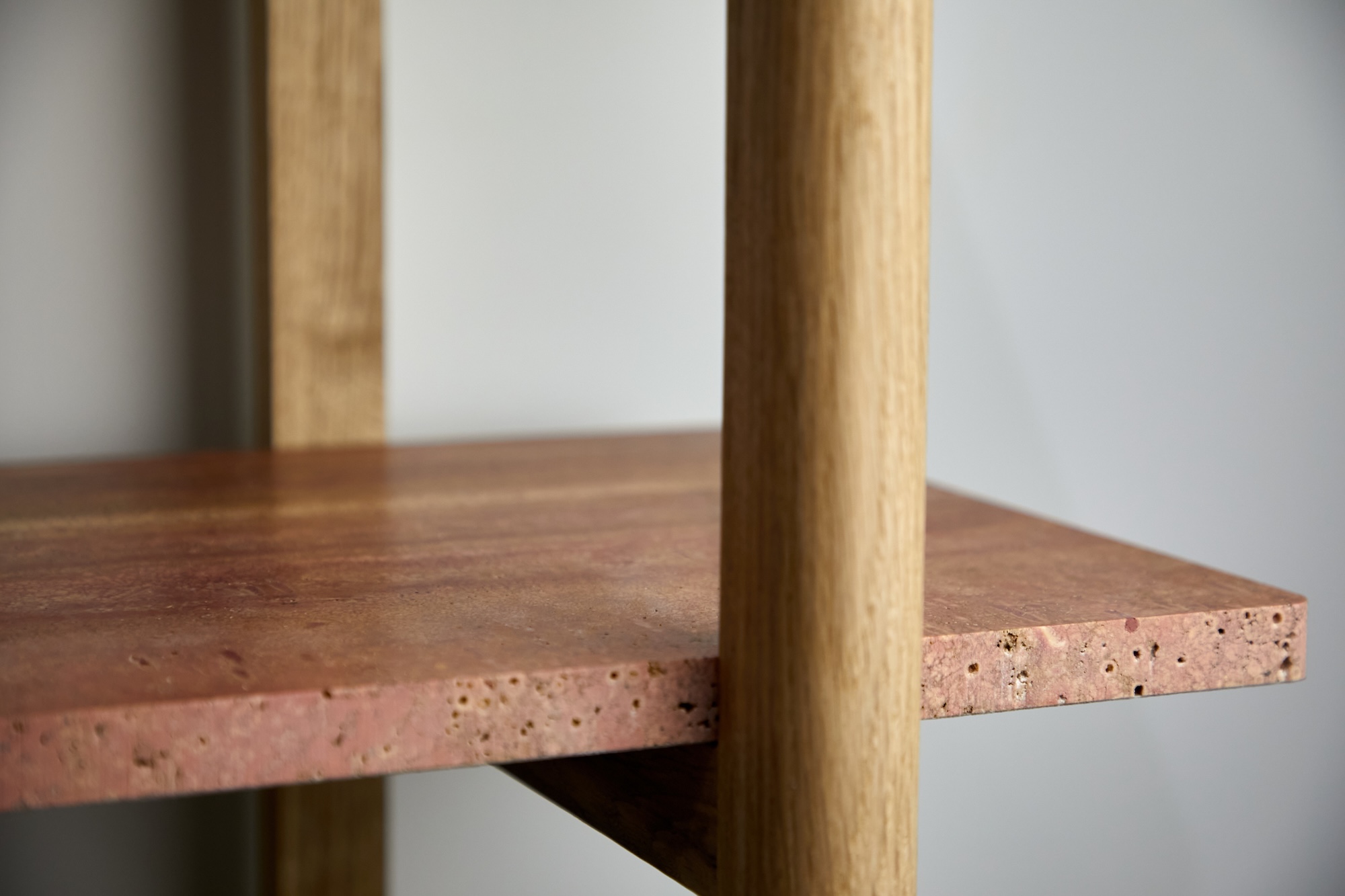
Working with reclaimed materials introduces challenges that are often underestimated. While materials may be inexpensive or free, the labor involved is not. Sourcing, storing, adapting designs to irregular materials, and adjusting fabrication processes all take time. Unlike new materials, reclaimed materials rarely arrive consistent in size, color, or quality.
Some companies are developing systems to process large volumes of unused materials, which Ariane sees as promising, but even these approaches require significant investment and infrastructure.
Launching Augusta brought its own surprises. Ariane found that curating and installing exhibitions occupied far less of her time than expected, with much of her work devoted to administration, logistics, and pricing. Pricing, in particular, remains a constant question, both for individual pieces and for maintaining a balanced range within the gallery.
Building relationships with designers came more easily, driven by studio visits, exhibitions, and long-standing professional networks. Engaging collectors required more deliberate effort. The gallery began with its immediate network and expanded through events, collaborations, and participation in fairs.
When communicating sustainability to collectors, the conversation usually starts with the object itself. Once a piece resonates, discussions about material origin and process tend to follow naturally. Visitors are often receptive, even if sustainability was not their primary motivation for entering the gallery.
However, a common misconception she encounters among emerging designers is the belief that sustainability alone is enough to sell work. “As sustainable as your design is, people will only purchase it if they love it,” she explains.
Asked whether the market genuinely wants sustainable work or is still operating performatively, Ariane points to storytelling and material processes as key drivers. Sustainability may be present in the background, but purchases are ultimately driven by personal connection. In practical terms, lighting and wall pieces have proven to be the most reliable sellers.
Looking ahead, Ariane is interested in expanding Augusta’s scope geographically, developing more collaborations between designers, and eventually seeing galleries play a more active role in supporting production and research through advances, purchases, or residencies.
When asked what question the design world should be asking itself, her answer remains open-ended and unresolved: how to continue creating and innovating while taking responsibility for resource use, and how independent designers might influence broader industry standards.
Deciding how to handle work she loves, but doubts will sell, requires much consideration. Each exhibition balances pieces expected to perform commercially with others that communicate research or concept more strongly. Occasionally, statement pieces receive a stronger response than anticipated, which reinforces the need to remain open.
Working with reclaimed materials introduces challenges that are often underestimated. While materials may be inexpensive or free, the labor involved is not. Sourcing, storing, adapting designs to irregular materials, and adjusting fabrication processes all take time. Unlike new materials, reclaimed materials rarely arrive consistent in size, color, or quality.
Some companies are developing systems to process large volumes of unused materials, which Ariane sees as promising, but even these approaches require significant investment and infrastructure.
Launching Augusta brought its own surprises. Ariane found that curating and installing exhibitions occupied far less of her time than expected, with much of her work devoted to administration, logistics, and pricing. Pricing, in particular, remains a constant question, both for individual pieces and for maintaining a balanced range within the gallery.
Building relationships with designers came more easily, driven by studio visits, exhibitions, and long-standing professional networks. Engaging collectors required more deliberate effort. The gallery began with its immediate network and expanded through events, collaborations, and participation in fairs.
When communicating sustainability to collectors, the conversation usually starts with the object itself. Once a piece resonates, discussions about material origin and process tend to follow naturally. Visitors are often receptive, even if sustainability was not their primary motivation for entering the gallery.
However, a common misconception she encounters among emerging designers is the belief that sustainability alone is enough to sell work. “As sustainable as your design is, people will only purchase it if they love it,” she explains.
Asked whether the market genuinely wants sustainable work or is still operating performatively, Ariane points to storytelling and material processes as key drivers. Sustainability may be present in the background, but purchases are ultimately driven by personal connection. In practical terms, lighting and wall pieces have proven to be the most reliable sellers.
Looking ahead, Ariane is interested in expanding Augusta’s scope geographically, developing more collaborations between designers, and eventually seeing galleries play a more active role in supporting production and research through advances, purchases, or residencies.
When asked what question the design world should be asking itself, her answer remains open-ended and unresolved: how to continue creating and innovating while taking responsibility for resource use, and how independent designers might influence broader industry standards.
The Design Release: Do you feel the market genuinely wants sustainable work, or are we still in the performative stage?
Ariane van Dievoet: I think the market wants stories, and material processes make for good stories.
TDR: Sustainability is on most people’s mind, but they will only purchase pieces that truly speak to them. What kinds of pieces sell most reliably in your experience?
AVD: Lighting has a mesmerizing effect on people. However, wall pieces (hard or soft materials) tend to be our best sellers.
TDR: Are buyers becoming more educated about materials and processes?
AVD: We have a lot of returning visitors, who understand the materials more and more, but newcomers are always as amazed when they hear about the techniques we showcase.
TDR: How has the Brussels scene changed in the last few years?
AVD: Brussels is a great place for designers as it is still possible to find affordable studios, usually in shared spaces. Many collective initiatives have emerged in the last few years and creates studios with strong identities. Our strategic location in Europe combined with recent developments has made the city more attractive. Collectors are growingly looking at Brussels thanks to initiatives like Collectible, Ceramic Brussels and more recently Curated, a fair started by Lionel Jadot.
TDR: What do you wish design fairs and institutions understood about sustainable design?
AVD: I wish sustainability was taken into account when planning a fair: from the (re)use of booth materials to the management of waste, as well as shipping solutions.
In terms of the piece exhibited, sustainability doesn’t seem to be a criteria. At Maison&Objet, I know there are Sustainable tours/visits organised. Talks and conferences are sometimes addressing sustainable practices.
I would like to see a fair highlight a sustainable selection or give a sustainability award.
In terms of the piece exhibited, sustainability doesn’t seem to be a criteria. At Maison&Objet, I know there are Sustainable tours/visits organised. Talks and conferences are sometimes addressing sustainable practices.
I would like to see a fair highlight a sustainable selection or give a sustainability award.
TDR: What advice do you have for young designers who want to work sustainably but don’t know where to begin?
AVD: Start with the nagging questions or the things that bother you and do what designers do best: find a solution.
During her BA in product design, Mathilde Wittock realised that millions of tennis balls were discarded every year as they lost their bounce. A tennis player herself, she decided to use their properties to create acoustic panels and seating. She designed a system to integrate the balls into wood components and create a repeated process. She was only 26 when we started representing her work at Augusta.
During her BA in product design, Mathilde Wittock realised that millions of tennis balls were discarded every year as they lost their bounce. A tennis player herself, she decided to use their properties to create acoustic panels and seating. She designed a system to integrate the balls into wood components and create a repeated process. She was only 26 when we started representing her work at Augusta.
TDR: What practices or materials do you see as most promising?
AVD: The most personal and unique ones. The ones that truly offer a solution with a strong aesthetic.
TDR: What are the biggest pitfalls designers fall into?
AVD: Undervaluing their time when pricing their work, especially at first.
Creative work tends to be undermined, so it’s no wonder that designers don’t know how much to charge. However, their work won’t be sustainable to them if they aren’t properly compensated.
Creative work tends to be undermined, so it’s no wonder that designers don’t know how much to charge. However, their work won’t be sustainable to them if they aren’t properly compensated.


