

One Year After the Fires
On January 07 2024, the Eaton Fire broke out in the San Gabriel Mountains. After burning for twenty-five days until its containment on January 31, it had taken nineteen lives and destroyed over nine-thousand structures; to date, it remains the second most destructive wildfire in California’s history. Simultaneously, across the County to the west, the Palisades Fire raged, ultimately taking twelve lives and destroying nearly seven-thousand structures. After thirty-one days of devastation, it emerged as the most destructive wildfire in the history of the City of Los Angeles.
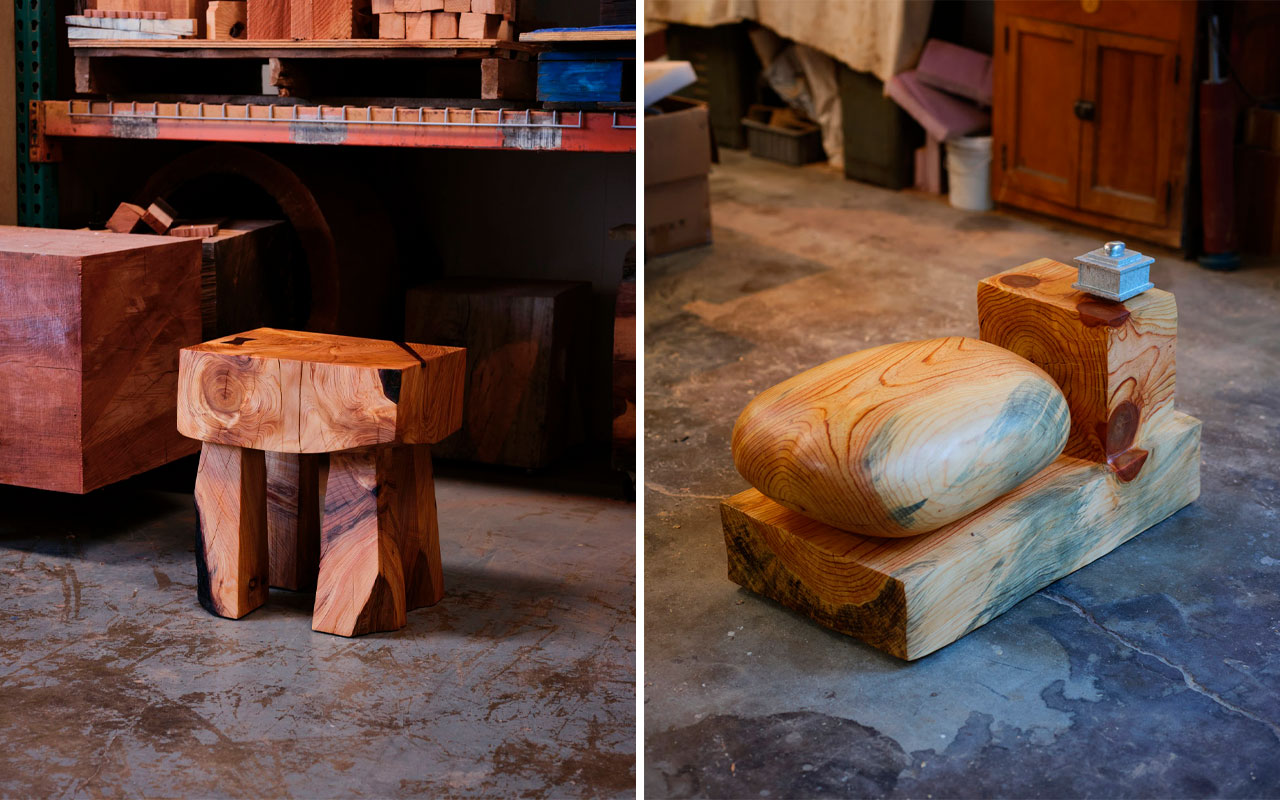
In an effort to continue an active engagement with these monumental events and their ongoing effects on both land and community, rather than relegate them to the static memory of history, Marta, with co-organizer Vince Skelly and material partner Angel City Lumber, presents From the Upper Valley in the Foothills, a group exhibition that honors sacrifice, celebrates resilience, and looks to the capacity of artists to examine the regenerative potential of a single, fundamental material: Wood.
Trees, perhaps more than any other element of a landscape, embody the spirit of lived existence. Over a lifetime, they offer their forms to place while bearing witness to, and influencing, the contours of everyday life—a balance of vision and impact to which each of the two dozen participating artists pay homage. Through the collection, collation, and cataloging endeavors of Angel City Lumber—a unique lumber mill that specializes in sourcing downed trees from around L.A. County for use in community projects—each individual or duo has chosen a section of wood that was cleared from Altadena, the foothill region most profoundly impacted by the Eaton Fire. The species, a cross-section of native and naturalized that represent the area’s biome—Aleppo Pine, Cedar, Coastal Live Oak, Shammel Ash—have been encouraged to transform through their invitation toward function: to result in places of rest and contemplation that suggest the repopulation of spaces that have been lost and must now be reimagined anew.
In their display, each work will receive an organic placement within Marta’s Silverlake gallery, sited so that visitors must weave between forms as they would those of a living forest. On the year anniversary of the fires, the presentation emerges as a collective experience of grief and hope—a monument to the past and a journey toward the ever-evolving future.

